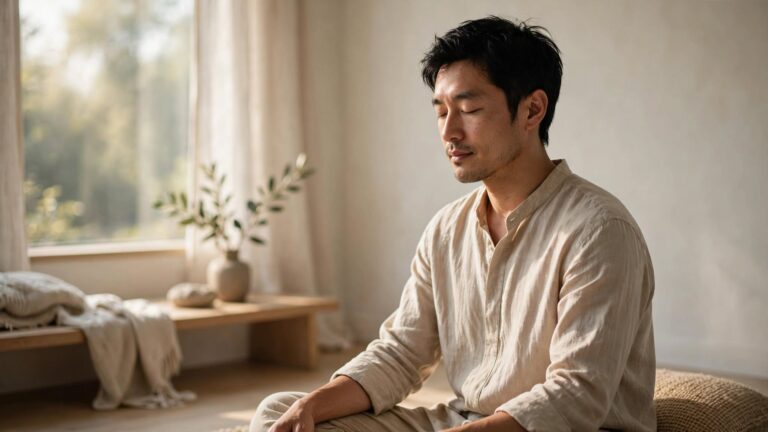
Living alone can be peaceful, but quiet days can also make thoughts feel louder. You may enjoy independence and still want more connection. Buddhist practice can help you use solitude intentionally: begin with awareness, meet emotions without judgment, cultivate loving-kindness, and then turn inward practice into wise connection with the world.
Begin With the Breath
Choose a regular time, perhaps after waking or before dinner. Sit for several minutes and notice breathing without changing it. Let the mind arrive where the body already is. When thoughts wander, return gently. The point is not to create a perfect meditation session but to establish a dependable moment of awareness.
Notice What Solitude Brings
Quietness may bring freedom, loneliness, boredom, gratitude, fear, or relief. None of these feelings needs to be rejected. Ask, “What is actually here?” Rather than judging yourself for feeling lonely, treat the feeling as information about a need for rest, friendship, purpose, or meaningful activity.
Practice Metta
Silently offer a simple wish: “May I be safe. May I be well. May I live with a peaceful heart.” Repeat it slowly for a few minutes. If the words feel artificial, that is fine. Loving-kindness is a practice of intention, not a demand that a particular emotion appear immediately.
Make Your Home a Place of Practice
Living alone gives you an unusual opportunity to shape your environment deliberately. Keep a small meditation space, make meals with attention, reduce unnecessary clutter, read something wholesome, or spend a few minutes caring for plants. Ordinary activities can become reminders to be present rather than occasions for automatic distraction.
Connect With the World
Inner practice should not become isolation. After meditation, take one outward action: message a friend, call family, greet a neighbor, volunteer, attend a community activity, join a meditation group, or spend time in nature. Even a short conversation can interrupt the habit of disappearing into your own thoughts.
A Ten-Minute Daily Routine
Try five minutes of breath awareness, three minutes of loving-kindness, and two minutes choosing one meaningful action. On busy days, shorten the practice rather than abandoning it. A small routine repeated regularly can become an anchor for living alone with greater steadiness.
Solitude Is Not the Same as Isolation
Being alone is a circumstance; isolation is a pattern of disconnection. You can live alone while maintaining friendships, community, service, and meaningful responsibilities. At the same time, if you notice persistent loneliness, hopelessness, or withdrawal, treat those signs seriously and consider reaching out to someone you trust or an appropriate professional.
Turn Solitude Into Practice
A quiet home can become a place where you learn to listen, care for the body, understand the mind, and choose your actions more deliberately. The goal is not to prove that you never need anyone. It is to become comfortable enough with yourself that connection with others comes from generosity and wisdom rather than desperation.