The Power of Pattanumodana is one of the most sublime yet frequently overlooked teachings in Buddhism. Have you ever felt a spontaneous surge of warm, serene joy when observing someone perform a selfless act or achieve genuine spiritual growth? In the Pali Buddhist tradition, this exquisite mental state is known as Pattanumodana-maya—the high spiritual virtue of rejoicing in others’ merit and good deeds.
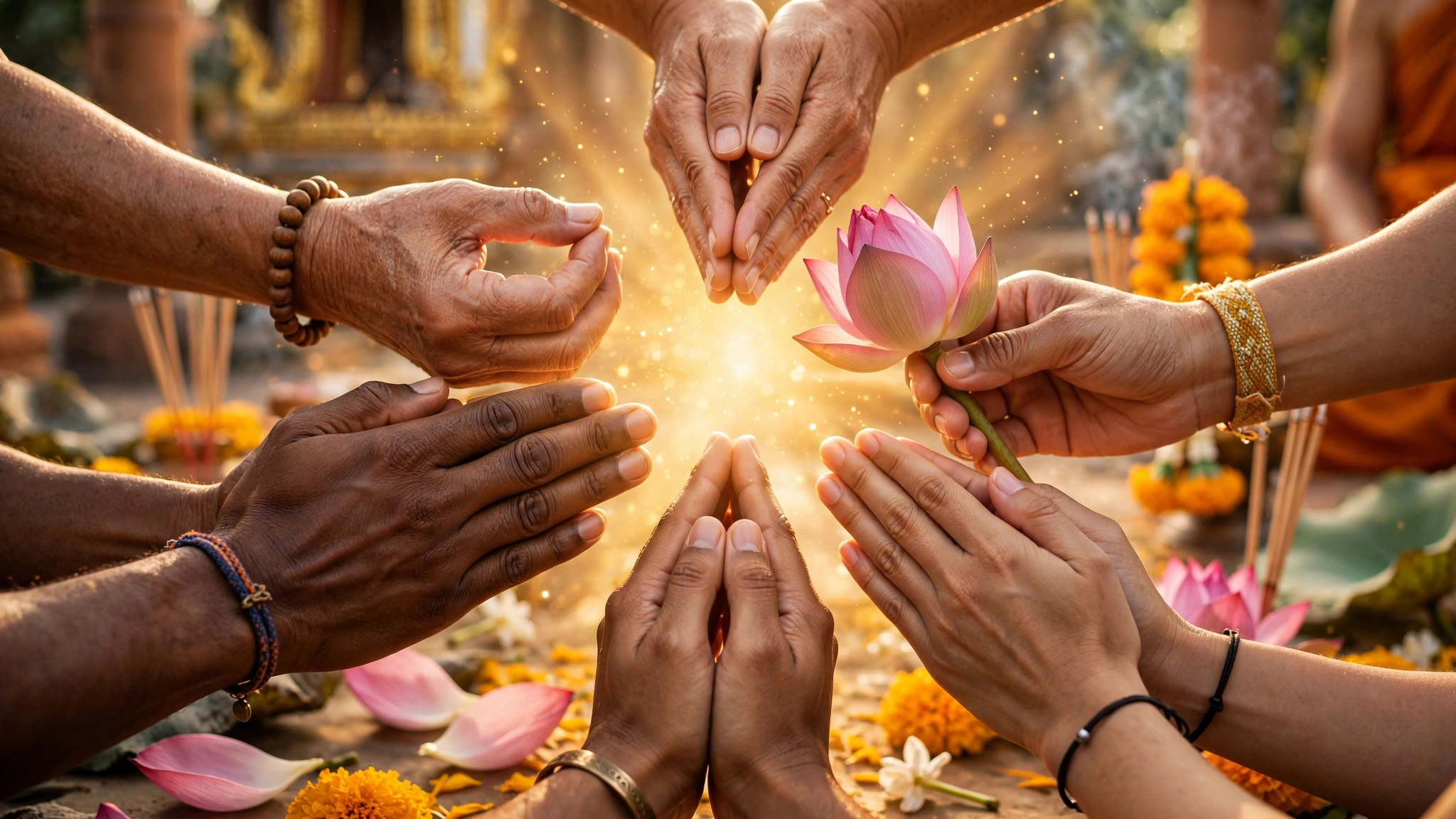
Table of Contents
What Is Pattanumodana? The Art of Rejoicing in Merit
The term Pattanumodana (ปัตตานุโมทนามัย in Thai) combines Patti (merit acquired by another) with Anumodana (rejoicing and taking delight). Rather than feeling envious or indifferent when another person performs charity, meditation, or moral deeds, the mind consciously attunes itself to their goodness. As explained in Theravada canonical commentaries, the Power of Pattanumodana allows an observer to generate substantial spiritual merit simply through pure, unblemished appreciation.
In the framework of the Ten Grounds of Meritorious Action (Punyakiriya-Vatthu), Pattanumodana proves that spiritual abundance is never a zero-sum game. You do not need wealth, status, or material resources to cultivate profound virtue; exploring 10 ways to create immense merit without money highlights how rejoicing stands as a primary vehicle for effortless spiritual wealth.
Overcoming Envy and Cultivating Mudita (Sympathetic Joy)
Human psychology is often plagued by jealousy (Issa) and resentment when others succeed. When someone receives praise, donates generously, or reaches spiritual milestones, an untrained mind can react with subtle comparison. The Power of Pattanumodana directly counteracts this poison by strengthening Mudita (unselfish, empathetic joy)—one of the four divine abidings praised by the Buddha.
As noted by Buddhist scholar Bhikkhu Bodhi in his teachings on the Four Sublime States, Mudita destroys cynicism and softens heart contractions. When practiced alongside loving-kindness (Metta) meditation, rejoicing transforms your emotional landscape into a fountain of boundless goodwill.
5 Transformative Ways to Practice the Power of Pattanumodana Daily
Integrating this wholesome practice into daily life does not require complex rituals. Here are five practical methods to engage the Power of Pattanumodana each day:
1. Uttering “Sadhu” with Sincere Heartfelt Gladness
When someone shares news of a donation, community service, or spiritual study, reply with a mindful “Sadhu” (meaning “it is well” or “excellent”). Do not treat it as a routine greeting; pause for three seconds to truly feel delighted by their wholesome initiative.
2. Silent Mental Rejoicing in Strangers’ Kindness
Whenever you witness a driver giving way politely, a volunteer feeding stray animals, or someone helping an elderly person cross the street, mentally celebrate the act. Direct your inner awareness to bless and rejoice in their noble intention.
3. Celebrating Colleagues’ Achievements Without Rivalry
In competitive work environments, a colleague’s promotion or creative triumph often sparks insecurity. Consciously evoke Pattanumodana: acknowledge their hard work, celebrate their reward, and recognize that their success diminishes none of your own potential.
4. Transforming Fleeting Jealousy into Wholesome Inspiration
Whenever a pang of envy arises upon seeing someone’s fortune or spiritual discipline, do not condemn yourself. Immediately pivot your mind: “How wonderful that they have cultivated the causes for this reward! May their happiness continue and grow.”
5. Concluding Daily Meditation by Rejoicing in Universal Goodness
At the end of your daily quiet sitting, call to mind all sages, teachers, medical workers, and benevolent individuals worldwide who are relieving suffering right now. Bow mentally in grateful celebration of their continuous meritorious deeds.
The Karmic Benefits of Sincere Rejoicing
In Buddhist moral philosophy, the Power of Pattanumodana carries an astonishing karmic principle: the person who sincerely rejoices in another’s virtue receives a share of that merit comparable to the original doer. While the benefactor offers material wealth or strenuous labor, the rejoicer cultivates pure mental luminosity (Citta-pasada). Over time, this mental purity builds the karmic causes for noble friendships, joyous countenance, freedom from depression, and rapid spiritual awakening.
Practical Application in Daily Life
Integrating core Buddhist principles and mindfulness into daily life provides more than just temporary stress relief—it cultivates an unshakeable inner resilience. When we train the mind to remain grounded in present-moment awareness, unwholesome states such as anxiety, anger, and agitation naturally subside.
Key Benefits of Daily Mind Training
- Emotional Stability: Develops clarity and composure, preventing the mind from reacting impulsively to challenging external situations.
- Enhanced Clarity & Decision-Making: A peaceful mind sees reality clearly, allowing for wise, compassionate, and well-considered choices.
- Cultivation of Inner Merit (Kusala): Daily acts of virtue, meditation, and goodwill build enduring spiritual wealth that enriches our lives and uplifts those around us.
Start with simple, consistent steps: dedicate 5 to 10 minutes each day to practice quiet meditation, cultivate the Power of Pattanumodana, and reflect on the impermanent nature of worldly experiences. Over time, these small moments of practice transform into a steady reservoir of inner peace.