

สมาธิ คือ ความสงบ สบาย และความรู้สึกเป็นสุขอย่างยิ่งที่มนุษย์สามารถสร้างขึ้นได้ด้วยตนเอง เป็นสิ่งที่พระพุทธศาสนากำหนดไว้เป็นข้อควรปฏิบัติ เพื่อการดำรงชีวิตประจำวันอย่างเป็นสุข ไม่ประมาท เต็มไปด้วยสติสัมปชัญญะและปัญญา อันเป็นเรื่องไม่เหลือวิสัย ทุกคนสามารถปฏิบัติได้ง่าย ๆ ดังวิธีที่พระเดชพระคุณหลวงปู่วัดปากน้ำ ภาษีเจริญ พระมงคลเทพมุนี (สด จนฺทสโร) ได้เมตตาสั่งสอนไว้ ดังนี้
ขั้นตอนการปฏิบัติ
-
กราบบูชาพระรัตนตรัย
เป็นการเตรียมตัว เตรียมใจให้นุ่มนวลไว้เป็นเบื้องต้น แล้วสมาทานศีลห้า หรือศีลแปด เพื่อย้ำความมั่นคงในคุณธรรมของตนเอง -
น้อมใจระลึกถึงความดี
คุกเข่าหรือนั่งพับเพียบอย่างสบาย ๆ ระลึกถึงความดีที่ได้กระทำไว้แล้วในวันนี้ ในอดีต และที่จะตั้งใจทำต่อไปในอนาคต จนราวกับว่าร่างกายทั้งหมดประกอบขึ้นด้วยธาตุแห่งคุณงามความดีล้วน ๆ -
นั่งขัดสมาธิ
-
เท้าขวาทับเท้าซ้าย
-
มือขวาทับมือซ้าย นิ้วชี้ขวาจรดนิ้วหัวแม่มือซ้าย
-
นั่งให้อยู่ในท่าที่พอดี ไม่ฝืน ไม่เกร็ง หลังตรงไม่โค้งงอ
-
หลับตาพอสบาย ๆ คล้ายกำลังพักผ่อน ไม่บีบตา ไม่ขมวดคิ้ว
-
ตั้งใจมั่น วางอารมณ์ให้สบาย รู้สึกพร้อมทั้งกายและใจ
-
-
นึกกำหนดนิมิต
นึกถึงดวงกลมใส ขนาดเท่าแก้วตาดำ ใสบริสุทธิ์ ปราศจากตำหนิ ขาวสว่าง เย็นตาเย็นใจ คล้ายประกายดาว ดวงแก้วกลมใสนี้เรียกว่า บริกรรมนิมิต-
นึกสบาย ๆ ให้นิมิตมาหยุดอยู่ ณ ศูนย์กลางกายฐานที่เจ็ด
-
ภาวนาพร้อมกันเป็นพุทธานุสติว่า “สัมมา อะระหัง”
-
หรือค่อย ๆ น้อมนึกให้นิมิตเคลื่อนเข้าสู่ศูนย์กลางกาย ตามแนวฐานใจทั้ง 7
-
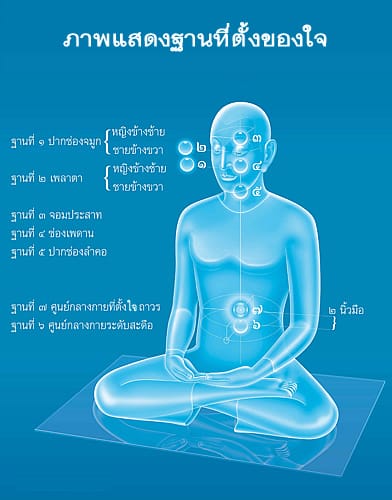
ฐานที่ตั้งของใจทั้ง 7
-
ปากช่องจมูก (หญิงซ้าย ชายขวา)
-
เพลาตา (หญิงซ้าย ชายขวา)
-
จอมประสาท
-
ช่องเพดานปาก
-
ปากช่องลำคอ
-
ศูนย์กลางกาย ระดับสะดือ
-
ศูนย์กลางกาย ที่ตั้งของใจถาวร เหนือสะดือสองนิ้วมือ
เมื่อดวงนิมิตปรากฏที่ศูนย์กลางกาย ให้วางอารมณ์สบาย ๆ หากหายไปก็ไม่นึกเสียดาย ให้นึกขึ้นมาใหม่ หรือหากไปปรากฏที่อื่น ให้น้อมกลับมาสู่ศูนย์กลางกายอย่างค่อยเป็นค่อยไป
เมื่อนิมิตหยุดนิ่ง ให้ตั้งสติไปที่ศูนย์กลางของนิมิต จะปรากฏดวงเล็กใสขึ้นภายใน เรียกว่า ดวงธรรม หรือ ดวงปฐมมรรค อันเป็นประตูเบื้องต้นสู่มรรคผลนิพพาน
เทคนิคเบื้องต้นในการทำสมาธิ
-
หลับตาเบา ๆ ประมาณ 90%
-
ไม่บังคับใจ ตั้งสติ วางใจเบา ๆ ณ ศูนย์กลางกาย
-
กำหนดนิมิต เช่น ดวงแก้วใส ๆ องค์พระใส ๆ ลมหายใจเข้าออก หรือท้องพองยุบ เลือกเพียงอย่างใดอย่างหนึ่ง
-
นึกนิมิตต่อเนื่อง เพื่อดึงใจให้อยู่ภายใน
-
เมื่อใจหยุดนิ่ง การนึกนิมิตจะหยุดเอง
-
รับรู้การเปลี่ยนแปลงของกายและใจอย่างสงบ
-
อยู่ในการดูแลของกัลยาณมิตร
หลักการฝึกสมาธิ
-
น้อมใจเก็บไว้ที่ศูนย์กลางกายให้นานที่สุด จนเป็นนิสัย
-
มีสติควบคุมใจอยู่เสมอ ไม่ยินดียินร้ายกับสิ่งที่มากระทบ
-
ฝึกอย่างสม่ำเสมอและตรงเวลา
-
มีครูอาจารย์ที่มีความรู้จริง คอยแนะนำใกล้ชิด
ข้อควรระวัง
-
อย่าใช้กำลัง
ไม่บีบตา ไม่เกร็งแขน ท้อง หรือส่วนอื่น ๆ เพราะจะทำให้ใจเคลื่อน -
อย่าอยากเห็น
รักษาใจให้เป็นกลาง อย่ากังวลว่านิมิตจะเกิดเมื่อใด -
อย่ากังวลกับลมหายใจ
การฝึกเพื่อเข้าถึงธรรมกายอาศัยการนึกถึงแสงสว่าง (อาโลกกสิณ) เป็นหลัก
เมื่อเลิกจากสมาธิแล้ว ให้วางใจที่ศูนย์กลางกายฐานที่เจ็ดเสมอ ไม่ว่าจะยืน เดิน นอน หรือนั่ง พร้อมภาวนาและนึกนิมิตควบคู่ไป
ผลแห่งการปฏิบัติ
-
การฝึกสมาธิอย่างสม่ำเสมอจะทำให้ได้ดวงปฐมมรรคที่ใสเกินใส งามเกินงาม ติดแน่นมั่นคงที่ศูนย์กลางกาย
-
ควรรักษาไว้ตลอดชีวิต เป็นหลักประกันว่าได้ที่พึ่งอันถูกต้องดีงาม
-
ส่งผลให้เป็นผู้มีความสุข ความเจริญ ทั้งในภพนี้และภพหน้า
-
เด็กเคารพผู้ใหญ่ ผู้ใหญ่เมตตาเด็ก ทุกคนอยู่ร่วมกันด้วยความสามัคคี
-
หากเผยแพร่ต่อไปโดยไม่จำกัดเชื้อชาติ ศาสนา เผ่าพันธุ์ ย่อมนำมาซึ่งสันติสุขอันไพบูลย์แก่ชาวโลก
Basic Meditation Practice
Meditation is a state of calmness, comfort, and profound happiness that one can cultivate by oneself. In Buddhism, meditation is prescribed as a way of living a mindful and joyful life, free from negligence, filled with awareness and wisdom. It is not beyond reach—everyone can practice it easily.
The following method was compassionately taught by the Most Venerable Luang Pu Wat Paknam Phasi Charoen, Phra Mongkolthepmuni (Sodh Candasaro):
Steps of Practice
-
Pay homage to the Triple Gem
Prepare the mind by becoming gentle, then undertake the Five or Eight Precepts to affirm moral discipline. -
Recall goodness
Sit comfortably on your knees or in a respectful posture. Reflect on good deeds done today, in the past, and those you intend to do in the future—until it feels as though your entire body is composed of pure goodness. -
Sit in meditation posture
-
Right leg over the left leg
-
Right hand over the left hand, index finger of the right touching the left thumb
-
Keep the body upright, not too tense, not too relaxed, and avoid slouching
-
Close your eyes gently, like resting, without squeezing the eyelids or frowning
-
Set the mind calmly and feel as if entering a state of deep tranquility and comfort
-
-
Visualize the meditation object (Nimitta)
Imagine a bright, crystal-clear sphere about the size of a pupil, spotless and radiant, like a shining star. This sphere is called the Meditation Object (Parikamma-nimitta).-
Imagine it resting still at the seventh base in the center of the body
-
Softly recite the mantra: “Samma Arahant”
-
Or gradually visualize the sphere moving through the seven bases until it reaches the center
-
The Seven Bases of the Mind
-
Nostrils (left for women, right for men)
-
Corner of the eye (left for women, right for men)
-
Center of the head
-
Roof of the mouth
-
Throat entrance
-
Center of the body at the navel level
-
Center of the body, two finger-widths above the navel (permanent seat of the mind)
When the bright sphere appears at the center, relax and let it be. If it disappears, don’t worry—gently create it again. If it appears elsewhere, softly guide it back to the center.
When the sphere becomes still, place attention at its center. A smaller, brighter sphere may appear inside. This is called the Dhammakaya Sphere or Path Sphere (Pathama-magga)—the initial gateway to higher attainments and the path to Nibbāna.
Basic Techniques
-
Close the eyes lightly, about 90% shut
-
Do not force the mind; simply place it gently at the body’s center
-
Choose one meditation object: clear crystal sphere, transparent Buddha image, breath, or abdominal movement
-
Visualize continuously to anchor the mind within
-
Once the mind is still, visualization will cease naturally
-
Observe inner changes with calmness
-
Practice under guidance of a spiritual teacher (Kalyāṇamitta)
Principles of Meditation
-
Keep the mind at the center for as long as possible until it becomes habitual
-
Maintain mindfulness at all times; stay unaffected by sights, sounds, smells, tastes, touches, or mental objects
-
Practice regularly and at fixed times
-
Learn under guidance of a competent teacher
Precautions
-
Do not use force
Avoid straining muscles—eyes, arms, stomach, or body—as it diverts the mind away from the center. -
Do not crave to see
Keep the mind neutral. Do not be anxious about when the nimitta will appear—it will arise naturally, like sunrise. -
Do not worry about breathing
This practice relies on Light Meditation (Āloka-kasiṇa) rather than breath control.
After meditation, always maintain the mind at the seventh base, whether standing, walking, sitting, or lying down, with gentle recitation and visualization.
Fruits of Practice
-
Regular practice leads to the emergence of the Path Sphere—clear, radiant, and firmly established at the center
-
Maintaining it provides a true refuge in life
-
Brings happiness, success, and mindfulness in this life and beyond
-
Fosters respect between young and old, harmony in society, and unity among people
-
If shared across humanity regardless of race, religion, or nationality, it will lead to lasting world peace